
Toothpaste is one of those things that is used daily, and even multiple times a day. It may not be the first thing you think of when you’re trying to be healthier, but there are some things to know! Toothpaste contains some ingredients that are a little scary and really don’t help with oral or overall health. It can be frustrating to walk down the toothpaste isle and realize that most of the options contain unwanted ingredients. But there are better, healthier, and safer options! Today I’m going to share my favorite natural toothpaste that strengthens teeth.

Before getting into a better-for-you toothpaste, we’ll discuss a couple of the red flags that you’ll find in the ingredient lists of mainstream toothpastes. This will help you know what to look for when deciding on a toothpaste. Next, I’ll share my favorite toothpaste swap and why I like it.
Mainstream Toothpaste
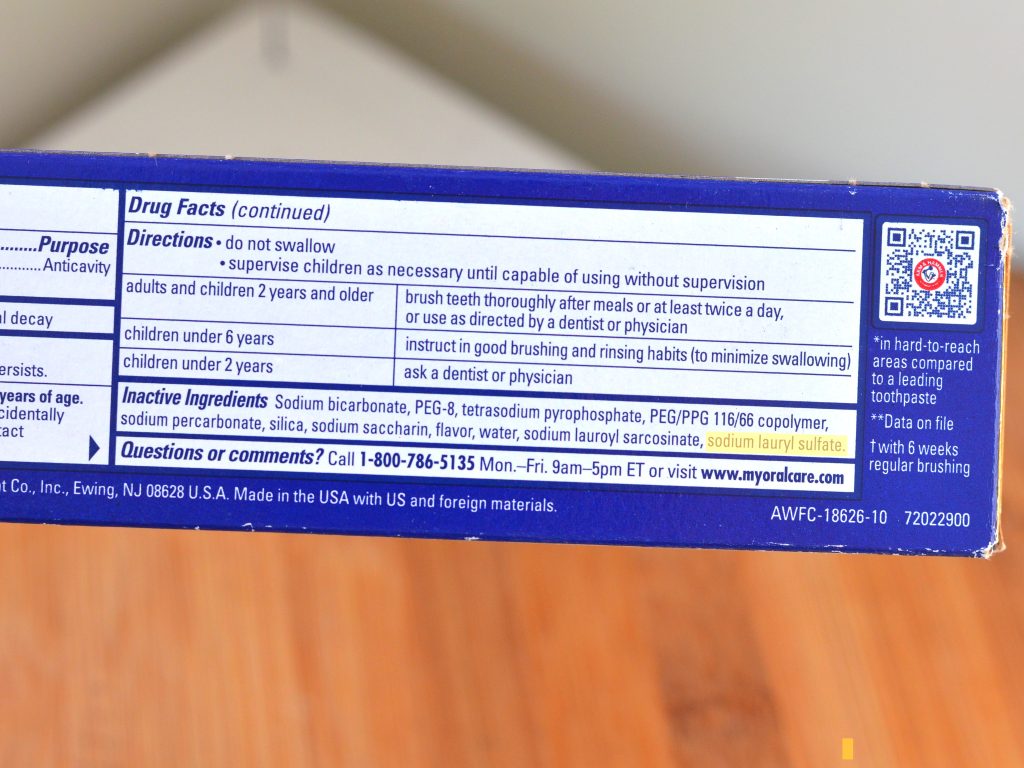
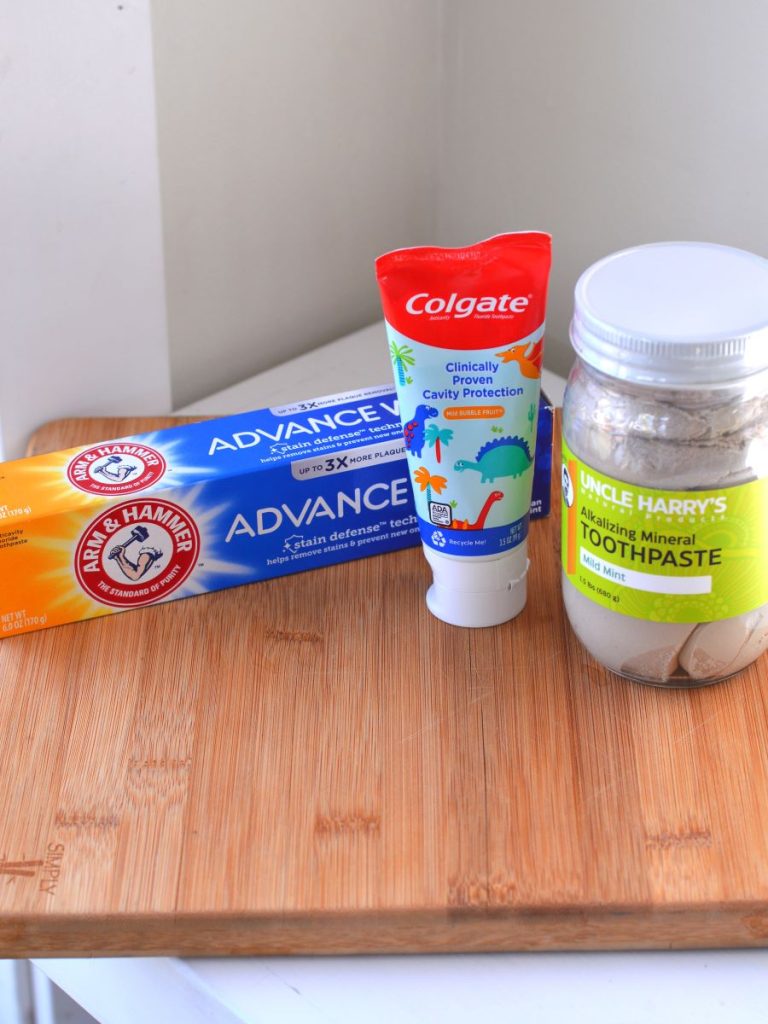
Your mouth is one of the most absorbent places on your body. So it’s really important to find a toothpaste that won’t leach harmful chemicals into your body. You don’t want those toxins to end up in your bloodstream. Two of the biggest red flags you’ll find in mainstream toothpastes are Sodium Lauryl Sulfate (SLS), which is a scrubbing agent, and artificial dyes.

Sodium Lauryl Sulfate (SLS)
This is a compound that gives foaminess and is common in cleaning products, shampoos, and toothpaste. But it is harsh on your body and as Bobby Parrish mentions in a toothpaste review video, it can “wear down the lining of your mouth.” This really doesn’t sound like a good idea, and isn’t what I want when I brush my teeth! I also learned from Dr. Leigh Sierra in this video that SLS also builds up in your system over time. So while it may not be toxic in small amounts, it can cause reason for concern over time as it builds up.
I know that the sudsy foam of toothpaste is appealing to a lot of people, but it’s really giving your a false sense of cleanliness in your mouth. The sudsy effect from SLS is doing damage to your mouth and your body.
Artificial Dyes
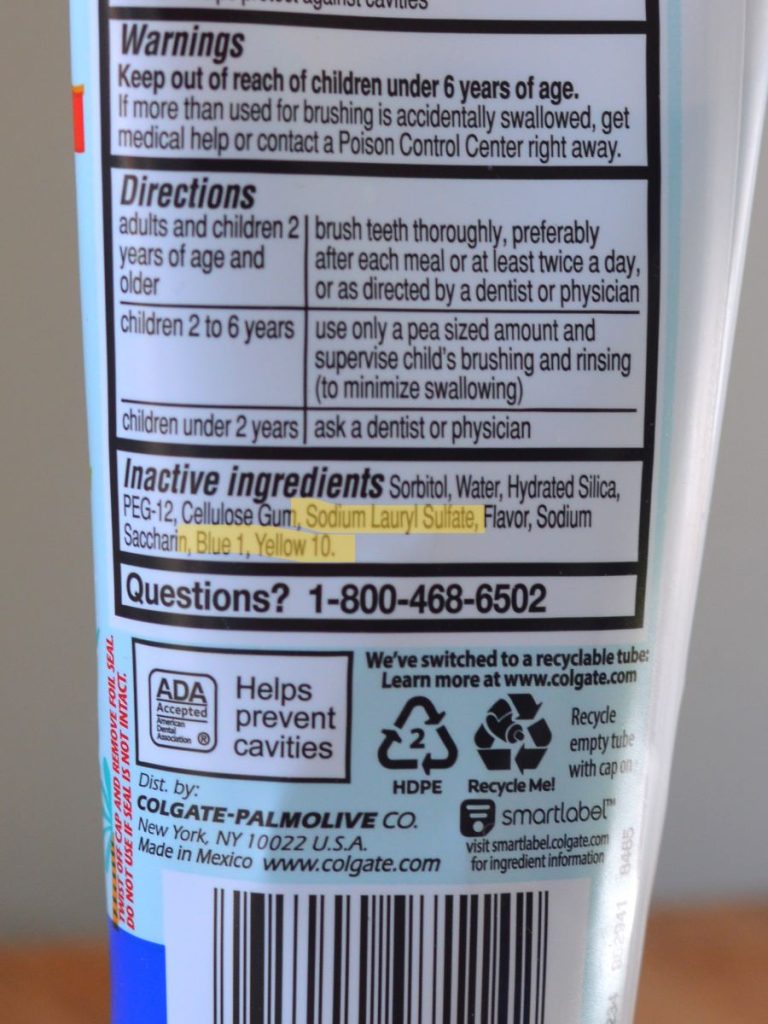
Something else that needs to be mentioned is the use of artificial dyes in many mainstream toothpastes like Colgate or Crest. Especially in children’s toothpastes. The only reason for having these in the toothpaste is for color and of course making toothbrushing more appealing for children.
Artificial colors are made with coal tar which sounds bad by itself, but one study showed some sobering evidence of health risks of artificial dyes. For example, Red 40 was contaminated with carcinogens and Blue 1 caused hypersensitivity reactions. This study concluded that, “The inadequacy of much of the testing and the evidence for carcinogenicity, genotoxicity, and hypersensitivity, coupled with the fact that dyes do not improve the safety or nutritional quality of foods, indicates that all of the currently used dyes should be removed from the food supply and replaced, if at all, by safer colorings.”

Evidence of Food Dye Unsafety
The effects of food dye has been a longstanding controversy. It is not completely understood, but there is enough evidence for me to strongly believe that food dyes are not safe for consumption. Here are some links to articles and videos with further information about artificial food coloring:
Food Dye Don’ts (The Doctors): these doctors mention concerns about food dyes, linking consumption to ADHD and even autism.
Why You Should Never Consume Artificial Food Dyes: Dr. Brian Stenzler goes into more depth about how dyes are made and why they should be avoided. He mentions that the purpose of artificial food coloring is to simply make items more appealing to the eye. They don’t change the taste at all.
It is especially disconcerting to me that these food dyes are most often marketed to children. Children’s toothpaste, for example, is very commonly colored with these dyes and it is simply to make them more desirable.
These are not the only too ingredients to be worried about in toothpaste, but I’ll leave it there for now. However, with just with these two ingredients in mind, you’ll find that it is better to steer away from most toothpaste on the shelf. Let’s talk about a better option!
Healthy Toothpaste Swap–Uncle Harry’s Alkalizing Mineral Toothpaste
For something that is used 2-3 times each day, it is worth finding something that doesn’t include harmful ingredients. And I found a good one!

Clay-based
One of the main things I looked for in a toothpaste was one that was clay-based and didn’t include the ingredients mentioned above. Bentonite clay, specifically, is rich in minerals that can remineralize and whiten your teeth. There are recipes galore out there that use bentonite clay in them if you’re interested in making your own. But for convenience, this is a great option.
I switched to Uncle Harry’s toothpaste almost three years ago, and have noticed a big difference in how my teeth feel. They feel cleaner after I brush, are less sensitive, and are whiter than they have ever been. I can’t recommend Uncle Harry’s toothpaste enough. They offer a variety of flavors, all made with essential oils, including anise, cinnamon, peppermint, and mild mint.
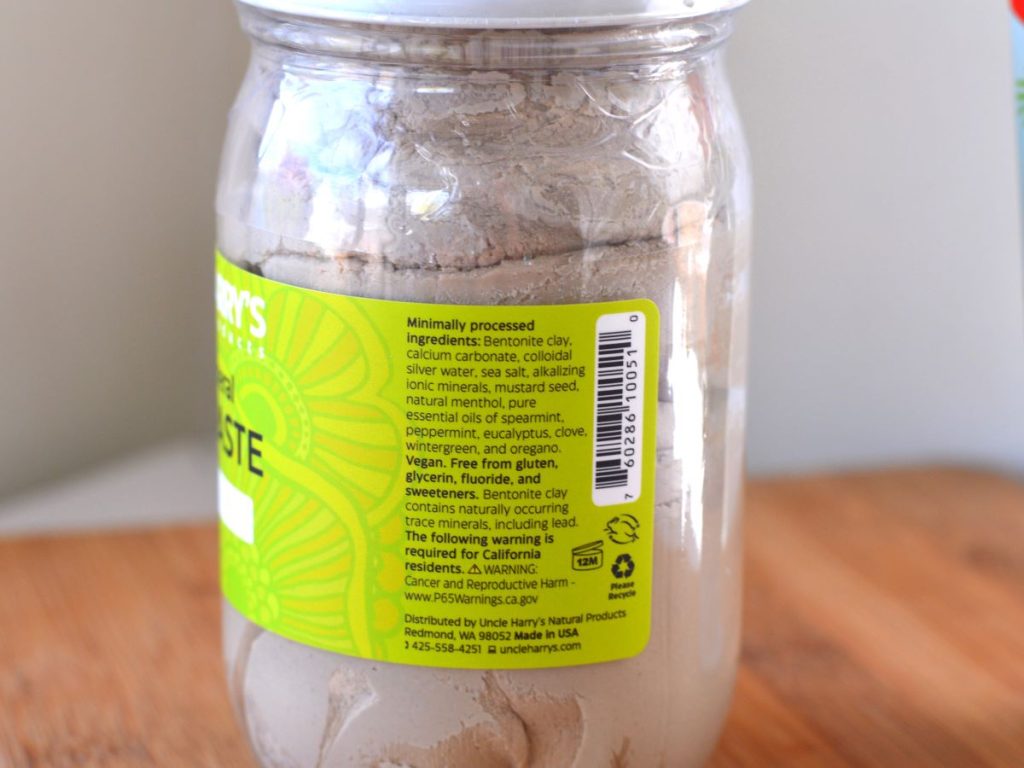
It takes some getting used to, as the color is not as appealing (hurray for no dyes!), it doesn’t foam like your typical toothpaste (yay for no SLS!) and the taste can be quite strong in the beginning. But you will not be disappointed with this switch. You will love the way your mouth feels! I have shared this product with several family members, and for the most part, they all love it! It lasts a long time, and my kids have grown to like it as well–my two year old will even use it!
I hope this information is helpful to you in your search for healthy mouth care. Let me know in the comments if you have a favorite healthy toothpaste!
If you are interested in other ways to improve your health with food, you may like to check out some of my recipes! I always share recipes with healthy oils, sweeteners, and whole ingredients. You may like my OVEN BAKED POTATOES AND BRUSSELS SPROUTS or EASY HOT QUINOA BREAKFAST CEREAL.
Leave a Reply