
With this healthy easy homemade almond milk recipe, you can be assured to have almond milk that is delicious and free of unwanted ingredients!

Almond milk is a staple at our house. We use it every day in smoothies and baking. I use it in my sourdough English muffins and make a buttermilk substitute to use in other recipes. For years we bought it at the store and I didn’t think too much of it. I even bought unsweetened almond milk in order to avoid added sugar. It wasn’t until a few months ago when I watched a video put out by Bobby Parrish about nut milks when I started questioning my decision to buy almond milk from the store. And that’s when I started making this healthy easy homemade almond milk recipe.
There’s really not anything terrible about storebought almond milk, but I didn’t like the idea that I wasn’t paying for actual almond milk. There are so many ingredients in the storebought stuff that you’re really getting very few almonds. So what is it even made of, if not almonds?
What is in storebought almond milk?
Let’s look at the label from a common almond milk brand, Almond Breeze. This is one I would often buy at Walmart.

The first couple ingredients are what we would expect–water and almonds. But then we get into a list of ingredients that are not so familiar, and we have to ask why are these included and what are they? Let me highlight a couple that we should be wary of.
Natural Flavors in storebought almond milk
“Natural Flavors.” Sounds good right? I mean, it’s natural! We see this ingredient in almost every packaged/processed item and it is really something we should steer away from. There’s actually not really anything natural about them except the original source, which is technically natural. This article brings to light many of the concerns with natural flavors. It includes, “these mixtures can contain more than 100 different chemicals in addition to their original flavor source, including preservatives, solvents, and other substances.” So how in the world is this natural?? It’s not!
With the freedom to add more than 100 different chemicals to the original source, this is not natural in the least. Healthline also notes, “Food manufacturers are only required to list flavors on ingredients lists, not to reveal the original sources or chemical mixtures of these flavors.” So we really have no way of knowing what these different chemicals are. That’s a little scary!
Fortunately, on the Almond Breeze brand, you do see the non-gmo symbol on the front of the carton. This signifies that the natural flavors aren’t as bad because at least they contain non-gmo additives. However, it still makes me a little uneasy to know that there could be so many things added to change the original source. And what’s the problems with the real flavor of almonds anyway?
Emulsifiers
Emulsifiers are used commonly in processed foods to prevent separation. Sunflower lecithin and Gellan gum are two used in storebought almond milk. They are used to achieve the creaminess that we love in almond milk.
Gellan gum
Gellan gum is an emulsifier that I wasn’t familiar with. Dr. Axe defines Gellan gum, “It’s a food additive produced through bacterial fermentation using a sugar source, which provides a source of energy for the bacteria to consume.”
Since making my own almond milk, I can see the desirability in preventing separation. Separation does occur, but it’s not something that can’t be fixed with a little shake of the container. I prefer this method. It’s easy and doesn’t require an extra ingredient!
So is there anything wrong with Gellan gum? Dr. Axe brings up a few things to be aware of. It could change the levels of healthy bacteria in the gut or cause digestive issues. Gellan gum is safe for most people, however only in small amounts. If almond milk is something you consume a lot of, you may want to consider making your own almond milk.
Carrageenan
Okay so this ingredient isn’t in the Almond Breeze above, however, in my research, I did find it in the shelf stable version (see photo below). This is another emulsifier. And it is one to avoid. It is a highly inflammatory emulsifier and it is found in many dairy products. Bobby Parrish talks about carrageenan in another video found here. Anything that causes inflammation should be avoided as it is very bad for gut health.

Added Sugar
I have highlighted unsweetened almond milk from the store because that’s what I would usually buy. However, it is worth noting that many almond milks also contain added sugar.
A healthy homemade almond milk recipe
The good news is that we can avoid these unwanted ingredients in this healthy homemade almond milk recipe. It is so easy and delicious.
Some people will use fancy equipment that is specific for making nut milks. But it can be extremely affordable and easy with simple nut bags. They are basically small canvas bags that allow just the almond milk through, leaving the pulp behind.
Ingredients for homemade almond milk
Raw almonds
Medjool dates
filtered water
Himalayan pink salt
Tools you will need
High speed blender
Nut bags for straining pulp
How to make homemade almond milk
Put 1 cup of raw almonds in a glass jar and fill with filtered water to at least one inch above the almonds. Soak overnight.

Drain and rinse the almonds.
Place almonds, 3 medjool dates, 1/4 tsp Himalayan pink salt, and 6 cups of filtered water in high speed blender. Blend for 2 minutes or until smooth.

Use a nut bag to filter the pulp out of the almond milk, and squeeze until very little milk comes out. (This step is optional. I don’t really mind the pulp in my almond milk, especially if I am using it for smoothies, so it’s up to you!)

Enjoy your homemade almond milk! It is normal for settling to occur while the almond milk sits in the fridge. Just shake well before using!
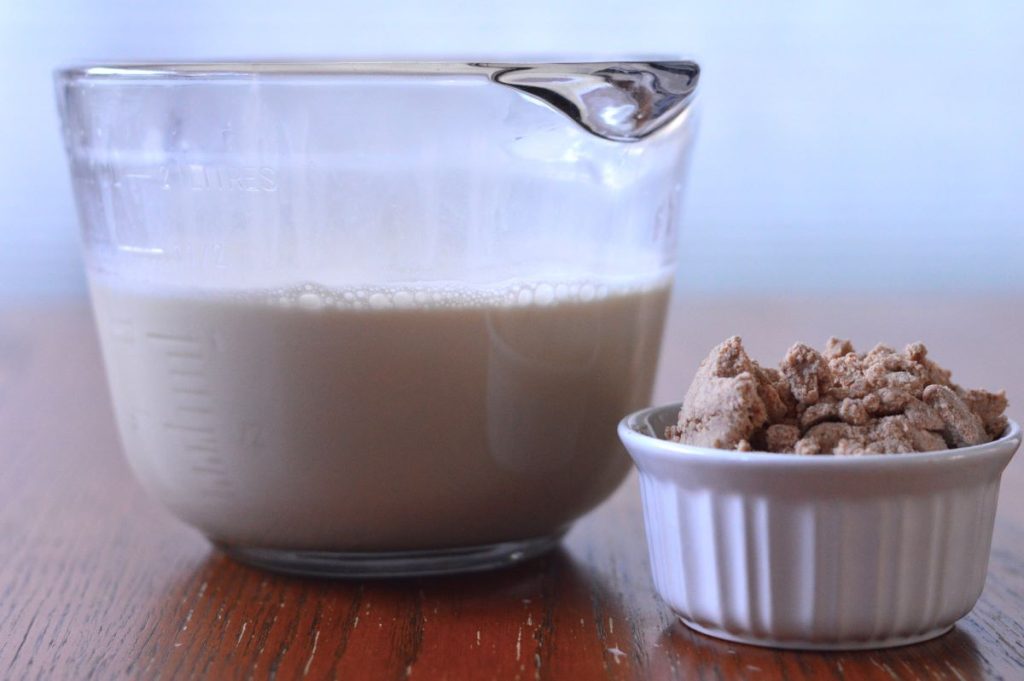
Easy Healthy Homemade Almond Milk Recipe

This easy, healthy homemade almond milk will be a new staple in your house. And you can rest assured knowing that there are no unwanted ingredients to worry about!
Ingredients
- 1 cup raw almonds, soaked overnight
- 3 medjool dates, pitted
- 5-6 cups filtered water (plus more for soaking almonds) *see notes
- 1/4 teaspoon Himalayan pink salt
Instructions
1. Place almonds in a jar and cover with filtered water, filling at least one inch beyond the top of the almonds. Soak for 8 hours or overnight.
2. Drain and rinse almonds.
3. Place soaked almonds, pitted Medjool dates, salt, and filtered water in high speed blender. Blend for 2 minutes or until smooth.
4. Place nut bag in a large bowl and pour the almond milk into the bowl. Let the milk filter through the nut bag as you gently twist the open side, making it tighter and squeezing out more milk.
5. Continue twisting the top of the nut bag and use your hands to squeeze more of the milk out of the bag, separating the pulp from the milk. This process may take a few minutes until most of the milk has been released from the nut bag.
6. Store in a glass jar in the refrigerator and use within five days. Shake well before using.
Notes
*As far as know how much water to add--if you'd like a creamier, thicker texture, start with 5 cups. I have found that 6 cups is not too much. The milk is plenty creamy and it stretches your almonds a little further.
*Separating the pulp from the almond milk is an optional step. If I am going to be using the almond milk strictly for smoothies, then I don't mind the pulp. However, in baking, I find that it performs better when the pulp has been removed.
*Add 1/2 teaspoon of cinnamon or vanilla to add a twist to your homemade almond milk.
*If your dates are tough, you may want to soak them for 10 minutes in filtered water before placing in the blender with the other ingredients.
Nutrition Information:
Yield:
8Serving Size:
1/2 cupAmount Per Serving: Calories: 54
Leave a Reply